The Crushing of the Uprising
The early successes of the Revolution would not last. Whilst the heroism and bravery of the
revolutionaries had taken the Soviet Union, and the rest of the world, by surprise, the
Red Army quickly recovered.
News bulletins at the time described the build up of Soviet troops:
Operation Whirlwind brought a decisive end to the Hungarin Revolution. Tanks entered Budapest
from every direction, meeting fierce resistance from civilians and militias who had little
more than rifles and Molotov cocktails.
By 11 November, organised resistance had been wiped out. Thousands of Hungarians were killed
or wounded, and much of Budapest lay in ruins. Around 200,000 people fled the country, in
what became one of Europe's largest post-war refugee crises.
You, who lie buried here, are the martyrs of freedom. The Hungarian nation will never forget you.”
From the official 1989 reburial ceremony at Heroes’ Square
Arrests and Repression
In the weeks following the invasion, the new Soviet-backed regime began restoring
control. Led by János Kádár, promises of amnesty quickly gave way to a campaign of mass arrests, trials, and executions.
Over 20,000 people were imprisoned and thousands more were sent to labour camps. Roughly 230
revolutionaries were executed, including soldiers, students, and workers who had led the fighting.
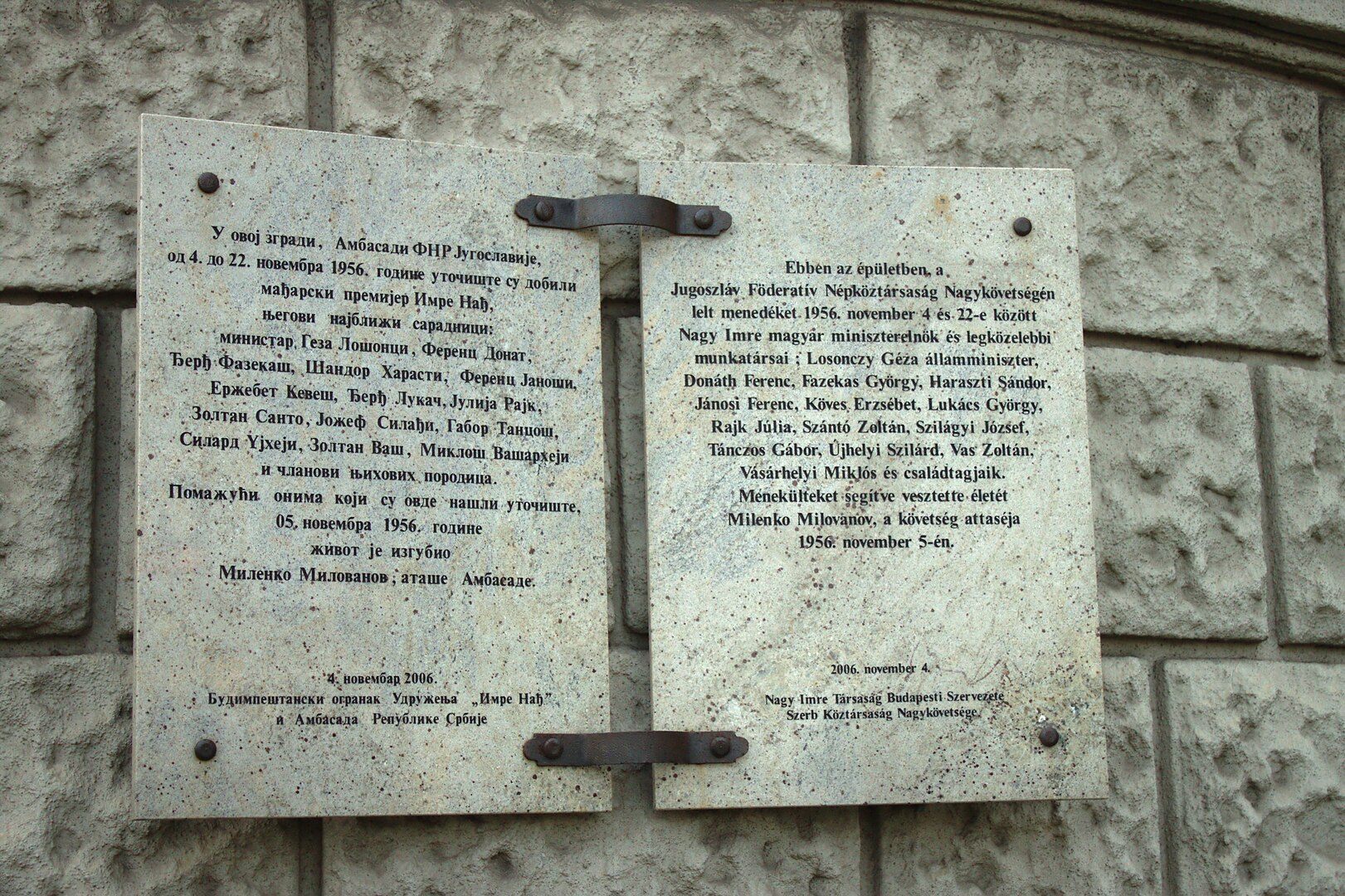
Among them was Imre Nagy, who had sought asylum in the Yugoslav Embassy but was lured out under
false guarantees of safety. He was secretly tried and executed in June 1958, along with several of
his associates. Their bodies were buried in unmarked graves.
The Kádár Government
Despite his collaboration with Moscow, Kádár gradually distanced himself from the brutality of the
early years. By the early 1960s, executions stopped, prisoners were released, and Hungary entered a
period known as "Goulash Communism".
This was a softer form of dictatorship that sought to balance loyalty to the Soviet Union with limited
domestic reform. Citizens were allowed small freedoms. Private farms, limited travel to the West,
and better access to good.
While economic conditions improved, political freedom remained restricted. The events of 1956 were
erased from public discussion. Schools, newspapers, and films portrayed the revolution as a
"counter-revolution" led by facists and imperialists. For more than three decades, the truth remained
officially suppressed.
Legacy and Revival
As Soviet control began to weaken in the 1980s, calls for reform once again spread across Eastern
Europe. The Revolution of 1956 was once again seen as a national uprising, not treason.
On 16 June 1989, the remains of Imre Nagy and his comrades were reburied with full honours in Hero's
Square. Over 200,000 people attended, many carrying the same red-white-green flags with the communist
emblem cut out in memory of the Revolution.
That summer, the Iron Curtain began to fall, and Hungary once again stood at the forefront of change
in Europe. The Revolution's message, and it's demands for freedom, truth, and independence, had finally
prevailed.
Conclusion
Though the 1956 uprising ended in tragedy, it remains one of the most important symbols of resistance in
20th Century Europe. It revealed the fragilty of Soviet control and inspired later movements for freedom
in Czechoslovakia and Poland.
Learn more about the Revolution with these additional resources.