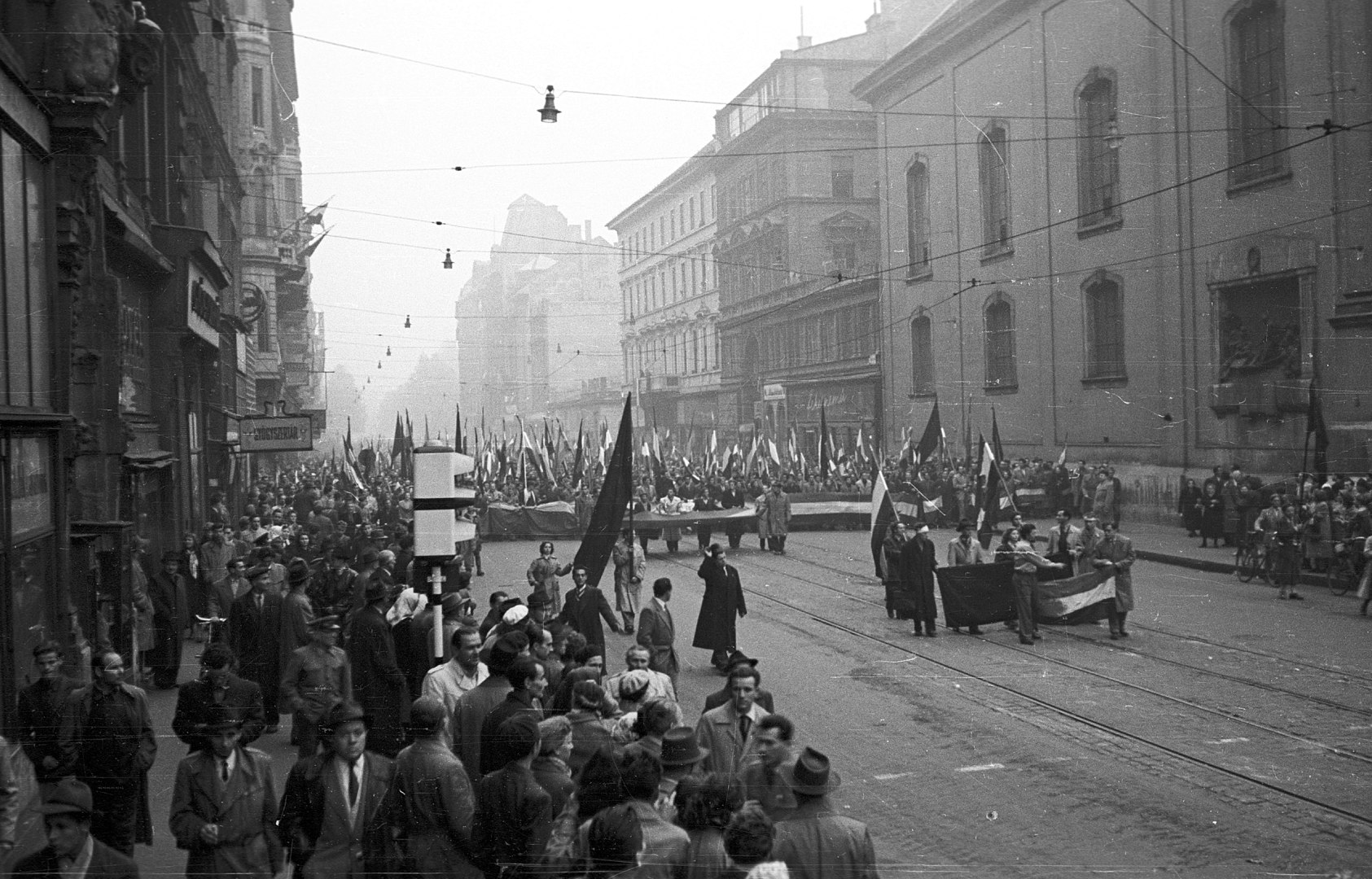
The Sixteen Points were the key goals for the Revolution. They aimed to reverse the
oppressive policies of the Rákosi government.
Click on each point to see the full demands.
The Sixteen Points of 23 October 1956
1. Immediate evacuation of Soviet troops
We demand the immediate evacuation of all Soviet troops, in conformity with the provisions of the Peace Treaty.
2. Election of new Party members
We demand the election by secret ballot of all Party members from top to bottom, and of new officers for the lower, middle, and upper echelons of the Hungarian Workers Party. These officers shall convene a Party Congress as early as possible in order to elect a Central Committee.
3. A new Government
A new Government must be constituted under the direction of Imre Nagy. All criminal leaders of the Stalin-Rákosi era must be immediately dismissed.
4. Public enquiry and trial
We demand public enquiry into the criminal activities of Mihály Farkas and his accomplices. Mátyás Rákosi, who is the person most responsible for crimes of the recent past as well as for our country's ruin, must be returned to Hungary for trial before a people's tribunal.
5. Free elections
We demand general elections by universal, secret ballot are held throughout the country to elect a new National Assembly, with all political parties participating. We demand that the right of workers to strike be recognised.
6. New relations with Soviet Russia and Yugoslavia
We demand revision and re-adjustment of Hungarian-Soviet and Hungarian-Yugoslav relations in the fields of politics, economics and cultural affairs, on a basis of complete political and economic equality, and of non-interference in the internal affairs of one by the other.
7. An improved economy
We demand the complete reorganisation of Hungary's economic life under the direction of specialists. The entire economic system, based on a system of planning, must be re-examined in the light of conditions in Hungary and in the vital interest of the Hungarian people.
8. Amount owed in reparations to be made public
Our foreign trade agreements and the exact total of reparations that can never be paid must be made public. We demand to be precisely informed of the uranium deposits in our country, on their exploitation and on the concessions to the Russians in this area. We demand that Hungary have the right to sell her uranium freely at world market prices to obtain hard currency.
9. A minimum living wage
We demand complete revision of the norms operating in industry and an immediate and radical adjustment of salaries in accordance with the just requirements of workers and intellectuals. We demand a minimum living wage for workers.
10. Decollectivisation of farms
We demand that the system of distribution be organised on a new basis and that agricultural products be utilised in rational manner. We demand equality of treatment for individual farms.
11. Review of trials and repatriation of prisoners
We demand reviews by independent tribunals of all political and economic trials as well as the release and rehabilitation of the innocent. We demand the immediate repatriation of prisoners of war (World War II) and of civilian deportees to the Soviet Union, including prisoners sentenced outside Hungary.
12. Freedom of expression
We demand complete recognition of freedom of opinion and of expression, of freedom of the press and of radio, as well as the creation of a daily newspaper for the MEFESZ Organisation (Hungarian Federation of University and College Students' Associations).
13. Removal of the statue of Stalin
We demand that the statue of Stalin, symbol of Stalinist tyranny and political oppression, be removed as quickly as possible and be replaced by a monument in memory of the martyred freedom fighters of 1848–49.
14. Replacement of foreign emblems
We demand the replacement of emblems foreign to the Hungarian people by the old Hungarian arms of Kossuth. We demand new uniforms for the Army which conform to our national traditions. We demand that March 15th be declared a national holiday and that October 6th be a day of national mourning on which schools will be closed.
15. Solidarity with Poland
The students of the Technological University of Budapest declare unanimously their solidarity with the workers and students of Warsaw and Poland in their movement towards national independence.
16. A Youth Parliament
The students of the Technological University of Budapest will organise as rapidly as possible local branches of MEFESZ, and they have decided to convene at Budapest, on Saturday October 27th, a Youth Parliament at which all the nation's youth shall be represented by their delegates.
The evening and the outbreak of violence
At around 19:00, another large group marched to the
Hungarian Radio Headquarters to have the 16 points broadcast. ÁVH (State Security Police) guards
refused to let them in. A small delegation of students was allowed to enter to negotiate, but were
instead arrested and beatn. When word of this reached the gathered crowd, anger erupted. Protesters
shouted demands for their release and tried to force their way into the building.
As the crowd tried to force their way into the building, the ÁVH fired warning shots over their heads.
Despite this, the protestors held their ground and as tensions rose, the lights in the surrounding
streets were switched off. In the confusion, the ÁVH began firing directly into the crowd. Several
protestors were killed or wounded, marking the first casualties of the revolution.
The Spark
As the day went on, more people joined. University students, factory workers, and ordinary citizens.
By the afternoon, tens of thousands were marching through the streets of Budapest, waving the Hungarian tricolour
with the communist emblem cut out, chanting "Russians go home!" and "We want Imre Nagy!"
They gathered at the Statue of General Józef Bem, a hero of both Polish and Hungarian freedom movements,
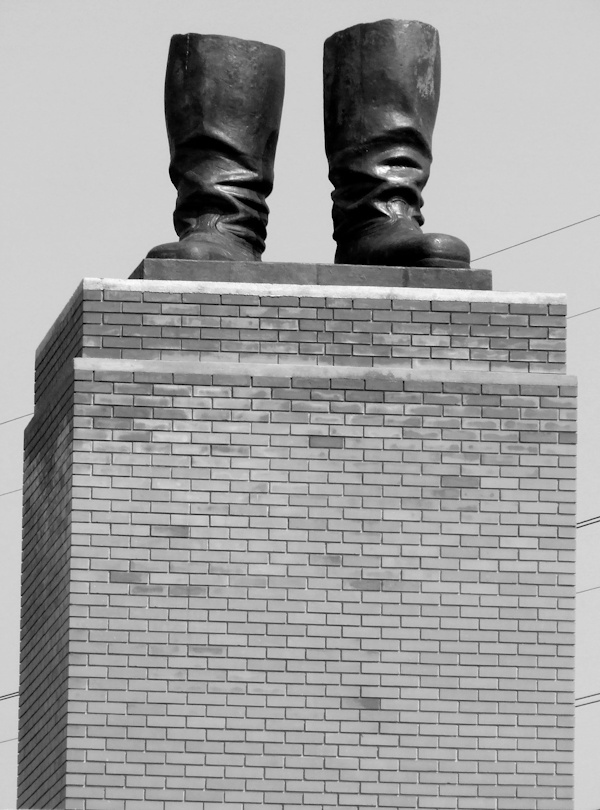
where the atmosphere was jubilant and full of hope. Later, crowds tore down the statue of Stalin, a towering symbol
of oppression, leaving only his boots behind on the plinth. This would go on to become one of the Revolution's most
powerful images.
Violence at the Radio Headquarters
That evening, a large group of protestors gathered outside the Hungarian Radio Headquarters. The ÁVH (State Security Police) refused to let them in. When a small
delegation of students entered to negotiate, they were arrested and beaten.
Word of their capture spread quickly, and the situation escalated. As the crowd tried to push their way into the building, the ÁVH opened
fire, killing and wounding several protestors. These were the first casualties of the revolution, and the moment when peaceful protest
turned into armed revolt.
Across the city, soldiers began handing over weapons to the crowd, and groups of freedom fighters began forming spontaneous militias.
Imre Nagy and the New Government
By 24 October, the situation was spiralling out of control. Soviet tanks rolled into Budapest that night under orders to restore order.
The following morning, Imre Nagy, a reformist communist and former Prime Minister of Hungary, was reinstated in an attempt to calm the
population.
Initially, Nagy called for peace and reform within the socialist framework, but as the fighting spread, he moved toward a position of
open independence.
In the days that followed, workers' councils and revolutionary committees took control of factories, universities, and discricts of the
city. The ÁVH disintegrated, and Soviet troops temporarily withdrew. For a few short days, it seemed that Hungary had won its freedom.
The people of Hungary have spoken. A new era has begun.”
Imre Nagy, radio address, 28 October 1956
Withdrawal from the Warsaw Pact
On 30 October, Nagy announced the formation of a new government. Censorship was abolished, and political prisoners were released. Then, on 1 November, Nagy took the boldest step of all. He declared Hungary's neutrality and announced its withdrawal from the Warsaw Pact, apealing to the United Nations for protection. For a brief, euphoric moment, Hungarians believed they had reclaimed their country's independence.
The Soviet Return
In the early hours of 4 November, Soviet forces launched Operation Whirlwind. This was a full-scale invasion with over 2,500 tanks and tens of thousands
of troops. They surrounded Budapest and bombarded key resistance points such as Corvin köz, Széna tér, and Kilián Barracks.
Fighting raged street by street for nearly a week. Despite their determination, the revolutionaries were outgunned and outnumbered. By
11 November, the uprising was crushed.
The Cost
Thousands were killed and many more wounded. Around 200,000 Hungarians fled across the western border into Austria to escape Soviet retribution.
Imre Nagy sought asylum in the Yugoslav Embassy but was later arrested and eventually executed in 1958.
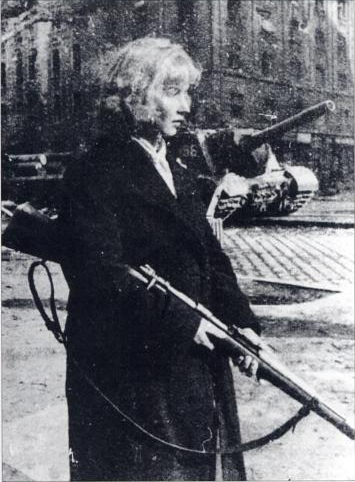
The Revolution of 1956 was a military defeat, but it left an enduring legacy. It became a symbol of courage and defiance, proving that even under
Soviet rule, the desire for freedom could not be extinguished.
Learn more about the aftermath of the Revolution.