Causes
After World War II, Soviet forces occupied Hungary. The Hungarian Communist Party,
backed by Moscow, took control under Mátyás Rákosi. His regime was marked by political
repression, show trials, and secret police terror. Thousands were imprisoned or
executed, and the economy suffered under forced industrialisation and collectivised
farming.
By the mid-1950s, frustration had reached a breaking point. Inspired by reform movements
in Poland, Hungarian students, workers, and writers began calling for change. They demanded
free elections, freedom of speech, and the withdrawal of Soviet troops.
Read more about the causes of the Revolution.
The Revolution
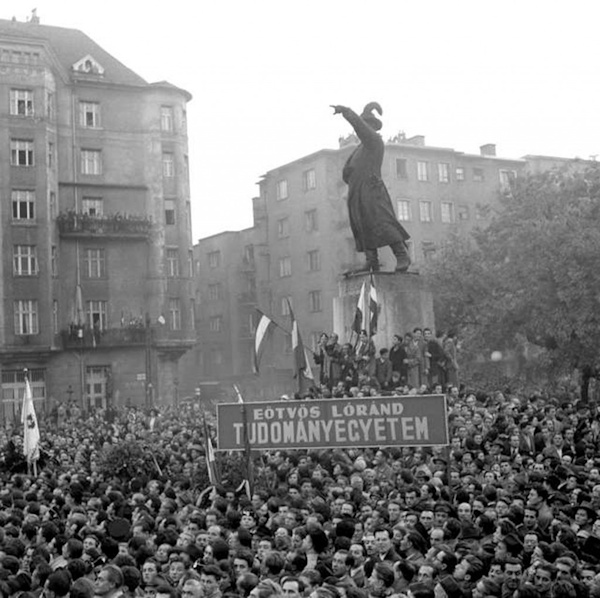
On 23 October 1956, students in Budapest organised a peaceful march to present their Sixteen
Points. A list of national and democratic demands. The crowd grew into tens of thousands,
gathering around symbols of national pride such as the statue of General Józef Bem and the
Hungarian Radio Headquaters.
Demonstrators attempted to broadcast their demands. ÁVH (State Security Police) guards
opened fire, killing several protestors. The violence ignited a nationwide revolt.
For several days, freedom fighters seized control of Budapest, pulling down Soviet emblems and
destroying the statue of Stalin.
Prime Minister Imre Nagy was reinstated. He announced plans for political reform, press freedom,
and withdrawal from the Warsaw Pact. These moves directly challenged Soviet authority.
Read more about the Revolution itself.
Aftermath
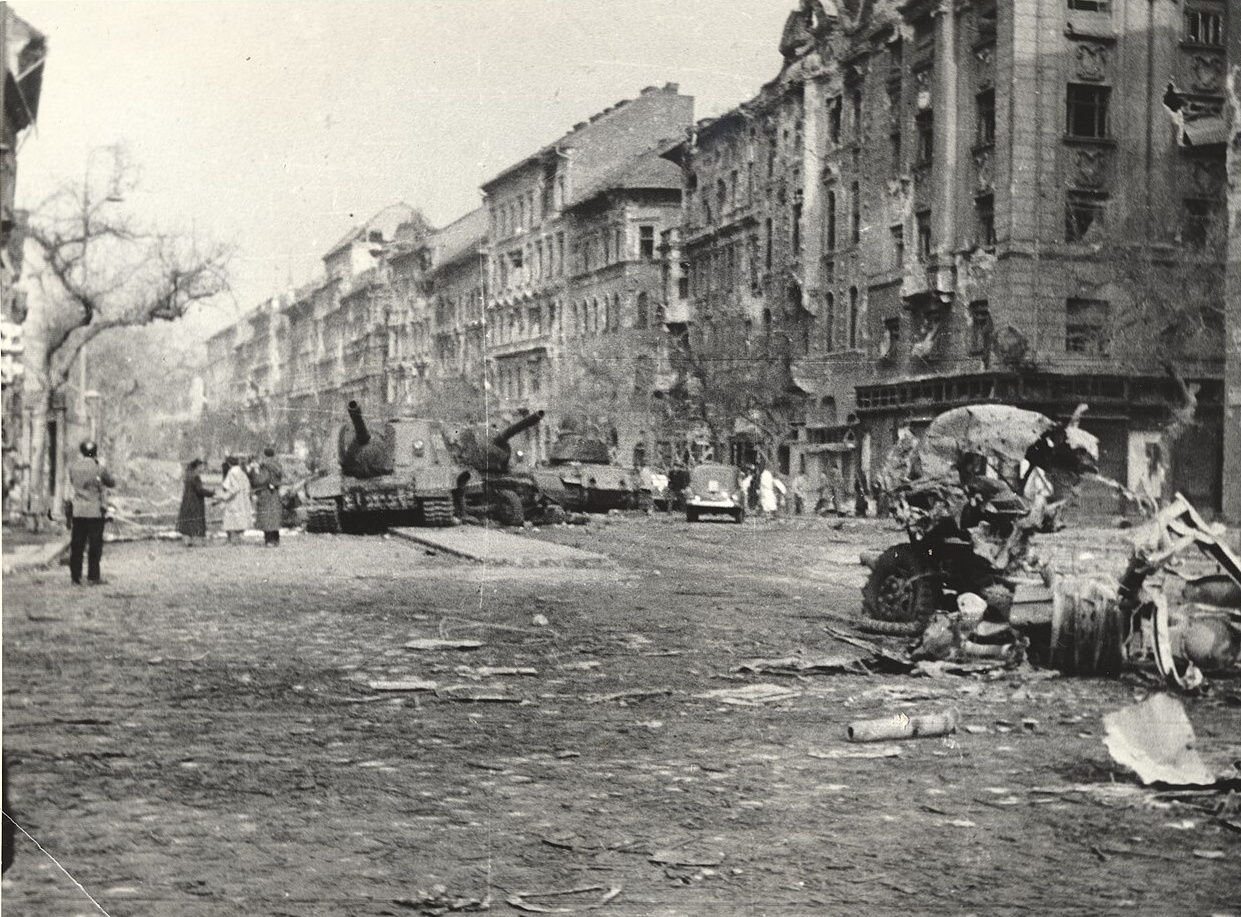
In the early hours of 4 November 1956, Soviet tanks re-entered Budapest. They crushed the uprising after
fierce fighting. Thousands of Hungarians were killed, and around 200,000 fled abroad as refugees.
Nagy was arrested, tried in secret, and executed in 1958. His replacement, János Kádár, established
a new government that pledged loyalty to Mosow. In the following decades, Hungary entered a period
known as "Goulash Communism", a softer form of dictatorship that offered limited economic reform and a modest
improvement in living standards, but no political freedom.
Though defeated, the Revolution left a deep mark on Hungarian identity and became a powerful
symbol of resistance against Soviet domination across Eastern Europe.
Read more about the aftermath and the consequences of the Revolution.
Key events
5 Mar 1953
The death of Joseph Stalin. His passing leads to a politcal thaw across Eastern Europe, raising hopes of reform.
19 Oct 1956
Polish reformer Władysław Gomułka rises to power in Poland, inspiring Hungarian students to act.
23 Oct 1956
Peaceful student demonstrations in Budapest grow into a mass protest. The Sixteen Points are read aloud. That evening, ÁVH opens fire on protestors outside the Radio Headquarters. This marks the true start of the Revolution.
25 Oct 1956
The Kossuth Square Massacre. Soviet and ÁVH forces fire on a crowd near Parliament, killing dozens.
4 November 1956
The Soviet Army invades Hungary in full force. Fighting continues until about 11 Novemeber, when the last pockets of resistance fall.
22 November 1956
Rebel leaders, including Imre Nagy, are arrested.
January 1957
János Kádár's new government consolidates control with Soivet backing. Thousands of rebels are executed or imprisoned.
June 1958
Nagy and several other Revolution collaborators are executed after a secret trial.